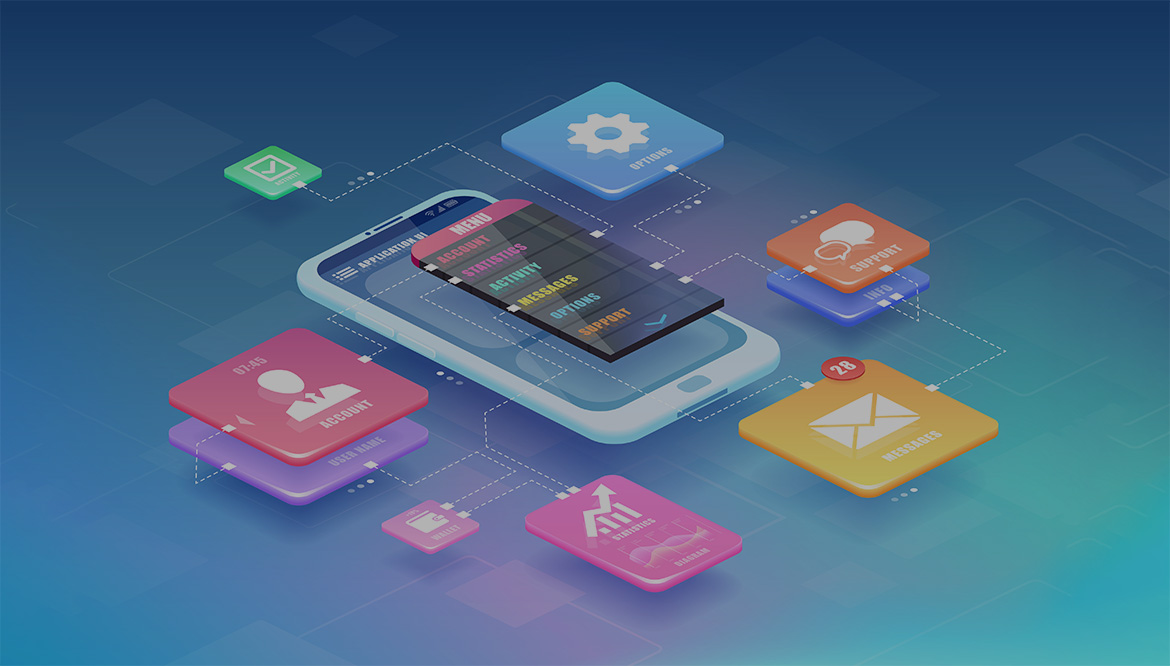
We live in an era of rapidly advancing technology that influences every aspect of our lives, and mobile applications are a significant part of this progress. It’s hard to imagine that smartphones appeared in our lives just over 20 years ago. But now, it’s impossible to envision even a single day without a mobile phone. If someone needs to find information or a product, they immediately reach for their mobile phone. Therefore, the number of mobile applications is increasing year by year.
This year, many new innovative ideas will dominate the mobile application market, making our lives easier and more convenient. Let’s take a look at some of them.
One of the trends gaining popularity in the world of mobile applications is blockchain technology.
What is blockchain, and how does it work?
Blockchain is a technology that enables the creation of immutable, cryptographically protected blocks containing data. Each block contains information about the previous block, which is why a chain of blocks is formed, hence the name “blockchain.” Thanks to this solution, information is stored in a decentralized manner, meaning there is no single central place to store it. Instead, data is distributed across the network, and each block must be verified by multiple network nodes to be considered valid. In this way, blockchain ensures the security, reliability, and transparency of stored data. According to a report by IBM, the average cost of a data breach was as high as $3.86 million in 2020. That’s why this technology in mobile applications is becoming increasingly popular. According to research conducted by Markets and Markets, the blockchain market in mobile apps will grow from $231.9 million in 2021 to $3.52 billion in 2026, representing an annual growth rate of 73.8%.
Blockchain is used in many industries and fields.

Here are a few examples:
Finance and Banking: It is used for faster and more secure information and financial transaction exchange without intermediaries. 95% of financial sector leaders believe that blockchain is a key technology that will impact the future of their industry.
Supply Chains: Blockchain allows tracking and verifying every transaction in the supply chain, increasing transparency and efficiency.
Healthcare: Here, blockchain technology can be used to store medical data, enabling faster and safer access to patient information.
Retail: Blockchain can assist in automating processes like payments, allowing secure transactions without intermediaries like banks, which can expedite the entire process.
Real Estate: Technology can significantly improve real estate transaction processes. By using blockchain, it’s possible to create a secure and transparent system where every transaction is recorded and accessible to interested parties.
Electronic Voting: Blockchain can be used for transparent electronic voting, enhancing the fairness and credibility of the process.
Artificial Intelligence: This technology is already being used to process data, which in turn is used for machine learning and AI development.
In summary, blockchain is not just a trend; it’s the future of mobile applications. Security, transparency, and decentralization are just some of the benefits offered by this innovative technology.
Another popular innovative trend in recent years among mobile applications – is voice and face recognition.
One of the reasons is the increased demand for secure and convenient user authentication methods that are more effective than traditional passwords.
According to a study, by 2025, the number of mobile devices using voice and face recognition will increase to 2.6 billion. With this growth, it can be expected that the number of applications using this technology will also continue to rise. Among the key benefits for users of applications using voice and face recognition are convenience, speed, no need to remember passwords, and the ability to avoid data theft.
Seeing this trend, companies like Apple, Google, and Microsoft are developing their solutions for voice and face recognition, which will further boost the popularity of these technologies in mobile applications in the future.
Another popular innovative trend is applications for market analysis and forecasting.
This tool is used to monitor and analyze market data and provide investment recommendations and forecasts based on that data. This allows application users to make informed investment decisions and manage their assets. An important aspect of market analysis and forecasting applications is their availability to individual users and businesses.
These applications use advanced algorithms and artificial intelligence to analyze large amounts of data from various sources. As a result of this process, the application generates investment recommendations and forecasts regarding future market changes, such as stock or currency value increases or decreases. Such applications are particularly useful for investors who want to minimize investment risks and maximize profits. With access to precise analysis and forecasts, investors have greater confidence in their investment decisions.
The last trend in mobile applications we would like to discuss today is Smart City Technology, also known as the city of the future.
It is based on the use of modern technological solutions to increase the efficiency and quality of life for city residents. Applications using this technology can help manage transportation, energy consumption, public safety, and many other aspects of urban life.
Thanks to the use of sensors, monitoring systems, and data analysis, these applications allow for quick and accurate responses to the needs of the city and its residents. For example, through intelligent traffic management systems, applications can help plan and coordinate traffic flow better, preventing traffic jams and congestion.
Statistics show that Smart City technology is gaining popularity. According to a report, the global Smart City market will be worth $820 billion by 2025, with an annual growth rate of 14.8% from 2021 to 2025. This growth will be driven by increasing demand for technological solutions that improve the quality of life for residents and increase city efficiency.
Innovative solutions based on Smart City technology have many benefits. They can help reduce air pollution by better managing traffic, reduce energy costs through the use of energy-saving smart systems, and enhance public safety through data monitoring and analysis systems.
The introduction of Smart City technology can bring many benefits to residents and cities. Applications using this technology are a key element in the development of cities of the future.
In conclusion, innovations in mobile applications are the key to success in today’s world. Introducing new features and leveraging new technologies can increase profits, improve a company’s image, and make daily life easier for users.


